How MongoDB Aggregation Pipelines Saved My Profile API
What started as a simple profile edit page turned into a lesson on database efficiency, scaling costs, and the power of MongoDB aggregation pipelines.
Building an Edit Profile Page Sounds Simple
Until you realize just how much data you're dealing with.
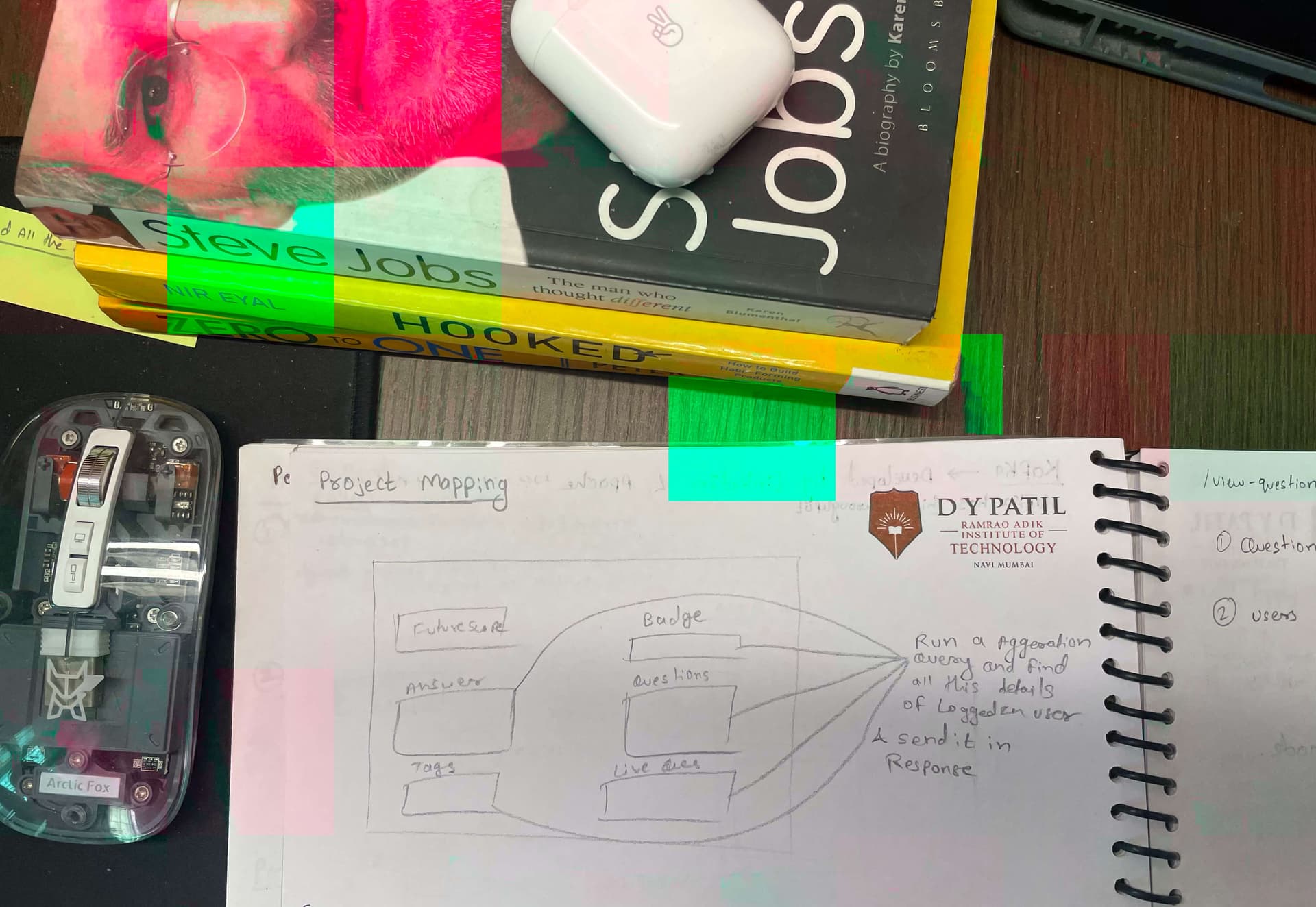
A few months ago, I was tasked with building a profile edit feature. Simple enough, right? But when I started mapping out what needed to be displayed, the scope exploded:
- User details and account info
- Badges earned
- Question count
- Total upvotes received
- Number of community rooms joined
- Plus all those other contribution metrics
Everything a user would want to see about their presence in the community.
My Initial Approach (And Why It Was a Problem)
My first instinct? Make an API call for each piece of data. Create multiple endpoints, call them all inside a useEffect hook on the frontend, load them in parallel, merge the data — done.
Then it hit me.
What happens when you have thousands — or millions — of users each loading their profile? Each user triggers 5, 6, or 10 separate API calls. Each of those calls hits the database. The server load multiplies. The costs multiply. Eventually, this scales into a real problem.
I needed a different approach: fetch all the data in a single API call.
The Complication
Here's where things got tricky. I was using MongoDB as my primary database, with data organized across multiple collections (a smart move for data integrity). But now I needed to:
- Query the user collection
- Fetch related data from several other collections
- Join them together based on IDs
- Build a single payload
- Send everything in one response
If I'd been using MySQL with foreign keys, this would've been straightforward. But MongoDB? That's different.
The Discovery: Aggregation Pipelines

That's when I discovered MongoDB aggregation pipelines.
I knew the concept existed — I'd heard it mentioned — but I'd never actually used one. So I did what any developer does: hit the docs, watched some YouTube tutorials, and read through blog posts until the operators started making sense.
The key stages I learned:
$match— Filter documents (like aWHEREclause)$lookup— Join data from other collections (like aJOIN)$unwind— Deconstruct arrays into individual documents$project— Shape the output (choose which fields to return)
Here's a simplified version of what the pipeline looked like:
db.users.aggregate([
  // Step 1: Find the specific user
  { $match: { _id: userId } },

  // Step 2: Join badges from another collection
  {
    $lookup: {
      from: 'badges',
      localField: '_id',
      foreignField: 'userId',
      as: 'badges'
    }
  },

  // Step 3: Join community rooms
  {
    $lookup: {
      from: 'rooms',
      localField: '_id',
      foreignField: 'members',
      as: 'rooms'
    }
  },

  // Step 4: Shape the final output
  {
    $project: {
      name: 1,
      email: 1,
      badges: 1,
      questionCount: 1,
      totalUpvotes: 1,
      roomsJoined: { $size: '$rooms' }
    }
  }
])
With these operators, I built a pipeline that fetched the user data, joined all the related collections, and returned everything in a clean structured payload — all processed on the database server before sending a single response to the client.
The Result
One API call. All the data. Reduced server load. Lower costs.
What could've been expensive infrastructure scaling became an elegant database query.
A Broader Pattern
Here's something I've realized since: pipelines are everywhere in software development. CI/CD pipelines orchestrate your deployment. Data pipelines transform information. Logging pipelines aggregate and route logs.
They're so common that I sometimes talk about them on calls, and my non-technical friends look at me confused. One asked, "Wait, when did you become a plumber?"
Fair question.
The principle is the same though: break down a complex process into distinct, sequential stages where each stage transforms the output of the previous one. Whether you're joining databases or deploying code, the metaphor holds.
The Lesson
Before you build something expensive, think about whether there's a more elegant way to solve it. Sometimes the best solution isn't building more — it's building smarter.
And if you're working with MongoDB and multiple collections, aggregation pipelines aren't just a nice-to-know. They're a game-changer.
Thanks for reading! Follow me on X at @viraj